I’ve been in the fire service for over twenty years. A little over 6 years ago, I moved into an administrative role and started learning more about the various divisions of the department, other than Operations or Suppression, including but not limited to: Training, Administration, Logistics, Prevention, and Fire Communications. My first assignment was the Emergency Medical Services Quality Improvement Coordinator (EMS QIC). In this role, one of the many tasks and responsibilities included investigating customer/patient complaints or incident concerns and would involve reviewing the incident from time of 9-1-1 call through to final patient care disposition.
All those years in the field, I communicated with dispatchers on the daily. I would listen intently to their incident dispatch, where they provided essential information I needed to ensure I knew where I was going and what I was going to encounter. They were there for me when I needed to request additional resources, or help getting more information from the 9-1-1 caller, or provide telemetry to the receiving hospital. They were not only my lifeline if I ever needed help, but also the neural network that made the whole system work.
But it wasn’t until I was in administration that I began to gain a better understanding of the breadth of what they actually did every day. I would come to learn that the dispatching side of the house is actually fun for them, the part of their day that they look forward to. Until I started listening to the 9-1-1 calls in the EMS QIC role and privileged with the responsibility of the Fire Communications Division, I did not fully appreciate their knowledge, skills, and abilities…as well as their perseverance, resiliency, and compassion.
I thought I had it rough when I ran those tough calls as a firefighter/paramedic. You know what I’m talking about…they still haunt my dreams. There’s not a day that goes by that I don’t drive past that intersection, or that apartment building with the pool, or that highway offramp. They all hold the memories and ghosts of those I touched, some I helped and others I watched drift away, always doing my best. But it turns out, 9-1-1 calltaking is much harder and tougher than anything I have experienced.
The panicked caller drops into the 9-1-1 calltaker’s ear, fearful for their life or the life of a loved one. They need help right now. Over the phone, with the limited sense of hearing and the gift of talking, 9-1-1 calltakers gather the address, phone number, and general understanding of what the emergency might be within minutes. All the while, they provide reassurance that help is on the way and life saving instructions for situations such as but not limited to: cardiac arrest (dispatch aided CPR makes a HUGE difference in the outcomes of out-of-hospital cardiac arrest victims), allergic reactions (epi-pen administration), respiratory distress (inhaler administration), obstructed airways, drownings, baby deliveries, etc. etc. They save lives every single day…
The firefighters and EMTs that are dispatched arrive most often 6-8 minutes later, after the caller has been reassured that help is on the way and has been given instructions to help the person they are concerned for (themselves or otherwise). The firefighters and EMTs don’t realize that the person they encounter when they arrive on scene was actually MUCH more agitated, panicked, fearful, and anxious just minutes earlier. The firefighters and EMTs don’t realize the luxury they have in being able to SEE and physically TOUCH the patient to more accurately determine what is wrong and how to fix it. The firefighters and EMTs don’t realize the importance of the CLOSURE they experience when they treat and transport the patient to the hospital, transferring a potentially stable (or hopefully at least improving) patient. Even the closure of knowing they did all that they could is something…
The 9-1-1 calltaker? They’ve, in the meantime, taken 8 more calls, one after the other. The callers have vacillated between the nagging knee pain that has been going on for months to the panicked mother who just found her toddler face down in the pool. Sometimes, when they just can’t take one more call, they might find a quiet place to cry, to mourn, to release. Meanwhile, their teammates are busy taking call after call and so they hurry back to help with the load.
I used to be that firefighter that took the 9-1-1 calltaker/dispatcher for granted, it was out of ignorance. Now, I respect them more than my words can express and I try to protect and provide for them with the limited resources we are granted. Perhaps, if people understood their value and worth, we would be able to hire enough staff so they didn’t have to work overtime or so they could take a breather between tough calls. Perhaps, if people could acknowledge and appreciate the Heroes you don’t see, the FIRST First Responders…?
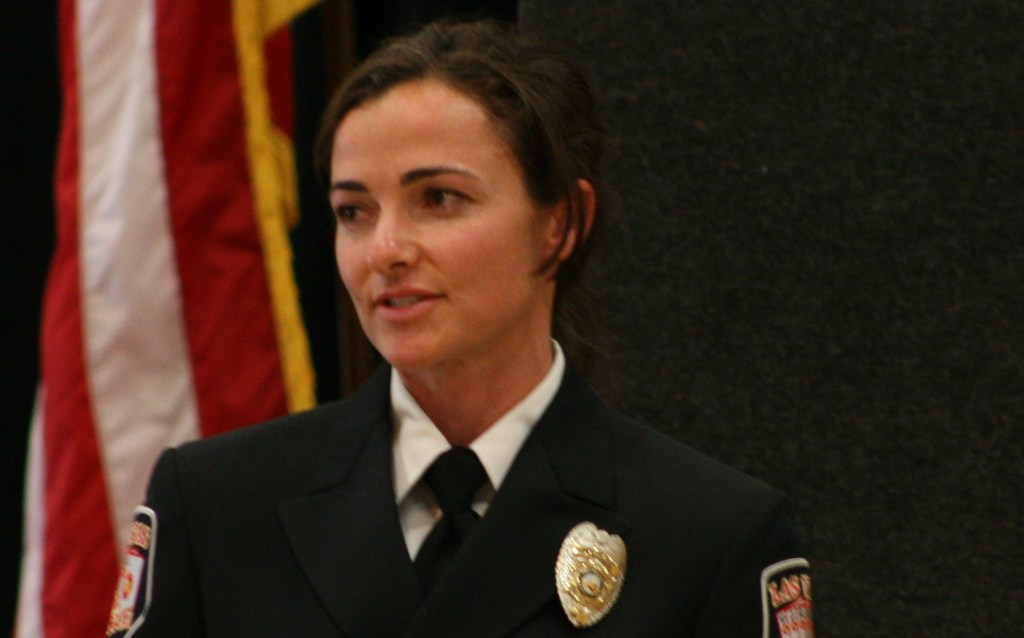
 Sarah J McCrea-Dameron